

Tibetan Festivals
 Tibetan Festival Calendar for 2024
Tibetan Calendar 2024, a list of mainly Tibetan Festivals and corresponding festival dates in 2015,such as Tibetan New Year, Shoton Festival and Saga Dawa.
 Tibetan Festival Calendar for 2016
Tibetan Calendar 2016, a list of mainly Tibetan Festivals and corresponding festival dates in 2016,such as Tibetan New Year and Saga Dawa.
 Tibetan Festival Calendar for 2015
Tibetan Calendar 2015, a list of mainly Tibetan Festivals and corresponding festival dates in 2015,such as Tibetan New Year and Saga Dawa.
 Tibetan Festival Calendar for 2013
Tibetan Calendar 2013, a list of mainly Tibetan Festivals and corresponding festival dates in 2013,such as Tibetan New Year and Saga Dawa. If your travel schedule allows, it is worth arranging a tour to Tibet when festivals are taking place.
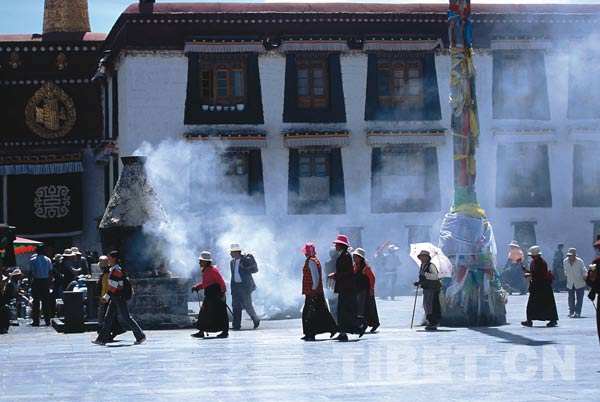 The annual Great Prayer Festival
Smoke of burning aromatic plant wreathes Jokhang Temple
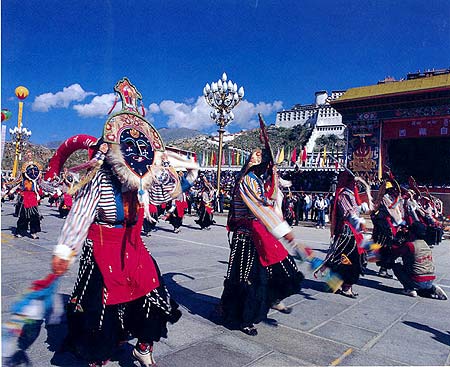 Tibetan Festival Calendar for 2012
Tibetan Calendar 2012, mainly focusing on the Tibetan Festivals on Tibet Calendar 2012 so as to help you to plan a Tibet trip in 2012. Arranging your Tibet tour during these Tibetan Festivals can enrich your unforgettable experiences in Tibet.
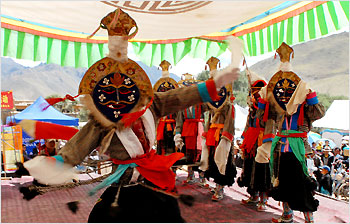 Harvest Festival
Harvest Festival, Ongkor in Tibetan, is celebrated when crops ripen, usually around August. The festival is celebrated only in farming villages. People walk around fields to bless for a harvest year. Singing, dancing, and horseracing are indispensable folk activities.
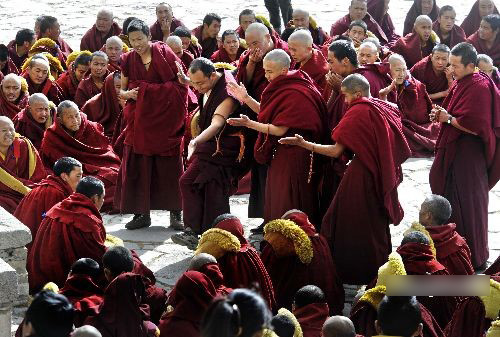 Universal Prayers Festival
Universal Prayers Festival, Zamling Chisang in Tibetan, falls on the 15th day of the 5th Tibetan month.The event is to commemorate Padmasambhava's Subjugation of evil spirits. People go to monasteries and burn juniper branches.
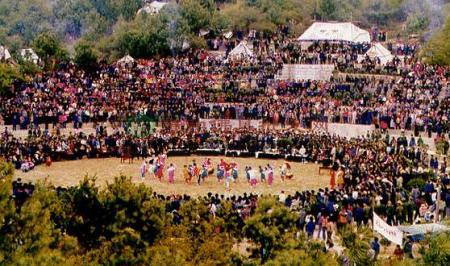 Holy Mountain Festival
Paying Homage to the Holy Mountain Festival, Choekhor Duechcen in Tibetan, falling on the 4th day of the sixth Tibetan month, is to commemorate Sakyamuni's first sermon. People, in their best conduct during the session, go to monasteries to pay homage to the Buddha. Circumambulation around mountains is the popular practice in the festival. Picnicking, singing and dancing are also part of the activities.
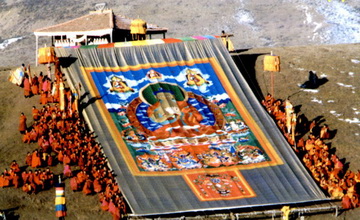 Buddha Unfolding Festival
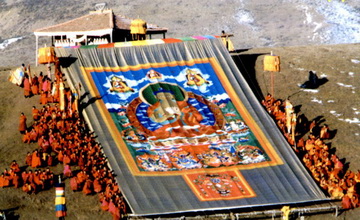
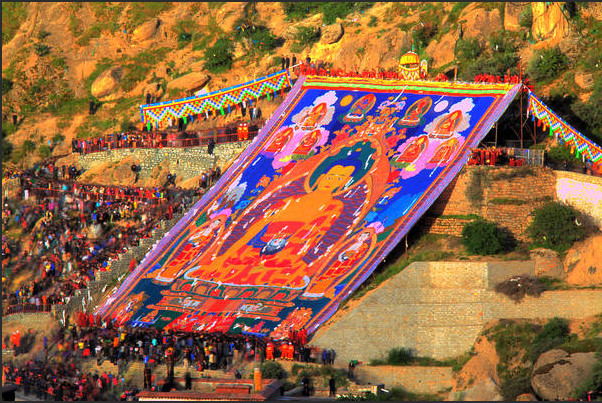
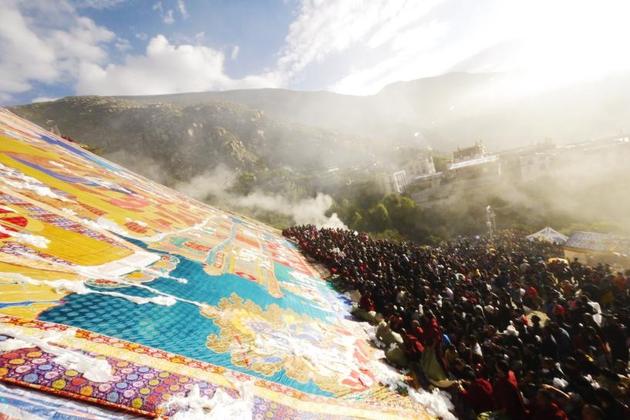
Buddha Unfolding Festival is celebrated in Tashilhunpo Monastery from the 14th to the 16th day of the 5th Tibetan month. Unbelievable giant Thangkas of Amitayus, Sakyamuni and Maitreya will be displayed on the monastery's Thangka Wall successively. Thousands of pilgrims rush to the monastery to pay their offerings to the Buddhas and accumulate their merits. The tradition has lasted for 500 years.
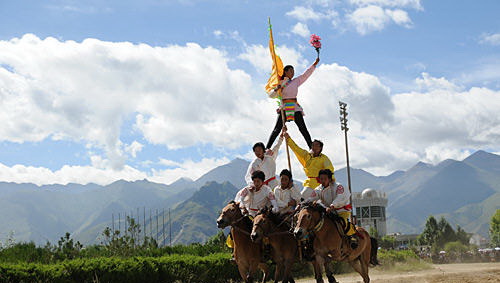 Horse Race Festival
There are different versions of the origin of Gyangtse Horse Race Festival, which is also popular throughout Tibet. The festival usually falls in June. Horse race, archery contest, and other games are performed to entertain people. Religious activities also are part of the event.
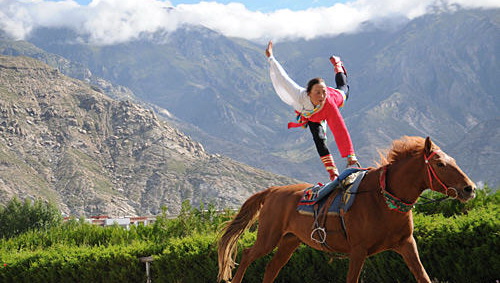 Nagchu Horse Race Festival
Nakchu Horse Race Festival is the most important horse racing in Tibet. People gather together in Nakchu town and construct a tent city. Dressing themselves and their best horses, thousands of herdsmen participate in the thrilling horse race, archery and horsemanship contest. Other folk activities and commodity fairs are also held. The event falls on the early August annually.
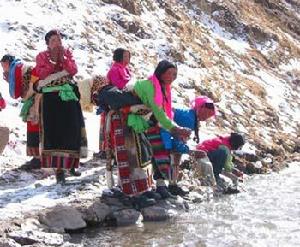 Bathing Festival
Bathing Festival starts on the 6th day of the 7th Tibetan month and lasts a week, when Venus appears in the sky. Tibetans bring food and set up tents along rivers and bathe themselves in star light. The holy bath is considered to be able to heal all diseases and get rid of misfortune.
